

SERIOUS INJURY CLAIMS
A serious injury can change every part of your life. It may affect your health, mobility, independence, ability to work, family life and future plans. In some cases, the impact can be long-term or permanent.
At Injuries Direct, a trading style of NJS Law, we help people understand whether they may be able to make a serious injury claim and guide them through the process with care, clarity and support.
Our aim is to help you take the next step with confidence, while ensuring the full impact of your injuries is properly considered.
A serious injury claim is a personal injury claim made when someone has suffered a significant injury due to an accident, negligence or another person’s actions.
These claims often involve injuries that have a major impact on everyday life, such as long recovery periods, ongoing treatment, permanent symptoms, loss of earnings, care needs, rehabilitation or changes to the home.
The purpose of a serious injury claim is to seek compensation for the pain, suffering and financial losses caused by the injury. This may include medical treatment, rehabilitation, care, equipment, home adaptations and future loss of income.
WHAT IS A SERIOUS INJURY CLAIM?
You may be eligible to make a serious injury claim if:
You suffered a serious injury
The injury was caused fully or partly by someone else
The accident or incident happened within the relevant time limit
There is evidence to support your claim
You may still be able to claim even if you were partly responsible for the accident. In these cases, compensation may be reduced depending on your level of responsibility.
If you are unsure whether you have a claim, Injuries Direct can review your situation and explain your options clearly.
CAN I MAKE A SERIOUS INJURY CLAIM?
TYPES OF SERIOUS INJURY CLAIMS WE HANDLE
-
Brain injuries can affect memory, concentration, speech, behaviour, mobility and independence. We can help if you have suffered a traumatic brain injury, concussion or long-term neurological symptoms following an accident.
-
Spinal injuries can cause severe pain, reduced mobility, nerve damage or paralysis. These claims often involve ongoing treatment, rehabilitation, care needs and changes to daily life.
-
Amputation injuries are life-changing and can affect mobility, work, independence and emotional wellbeing. Compensation may help with prosthetics, rehabilitation, care, adaptations and future support.
-
Some accidents cause more than one serious injury, such as fractures, head injuries, soft tissue damage or psychological trauma. We can help ensure the full impact of all injuries is considered.
-
If a loved one has died because of an accident or negligence, certain family members may be able to claim compensation. This can include bereavement damages, dependency claims and funeral expenses.
-
Serious injuries to children can have long-term effects on development, education, care needs and future independence. A claim can be made on behalf of a child by a parent, guardian or litigation friend.
-
Chronic pain can continue long after the initial injury and may affect work, sleep, mobility and mental health. We can help where ongoing pain has developed because of an accident or negligence.
-
Eye injuries can range from temporary vision problems to partial or total sight loss. Compensation may cover pain, treatment, loss of vision, impact on daily life and future support needs.
How to Make a Serious Injury Claim
Making a serious injury claim can feel daunting, especially when you are already dealing with treatment, recovery and uncertainty about the future. Injuries Direct can guide you through each stage.
STEPS TO MAKING A SERIOUS INJURY CLAIM
1
— CONTACT INJURIES DIRECT
Start by speaking to our team. We will listen to what happened, ask some simple questions and explain whether you may be able to make a claim.
2
— GATHER EVIDENCE
Evidence is important in serious injury claims. This may include accident reports, photographs, witness details, medical records, police reports, workplace records, CCTV footage and details of any financial losses.
3
— MEDICAL EVIDENCE
Medical evidence is usually essential. You may need reports from medical experts to assess the full extent of your injuries, your recovery, future treatment needs and any long-term impact.
4
— REHABILITATION AND SUPPORT
Serious injury claims may involve rehabilitation needs such as physiotherapy, occupational therapy, counselling, mobility aids, specialist equipment or home adaptations.
5
— VALUING THE CLAIM
Your claim will be assessed based on your injuries, pain and suffering, financial losses and future needs. This may include future loss of earnings, care, treatment and support.
UNSURE IF YOU HAVE A CLAIM?
Contact Injuries Direct today for realistic advice
0330 818 1202
HOW MUCH COMPENSATION CAN I RECEIVE?
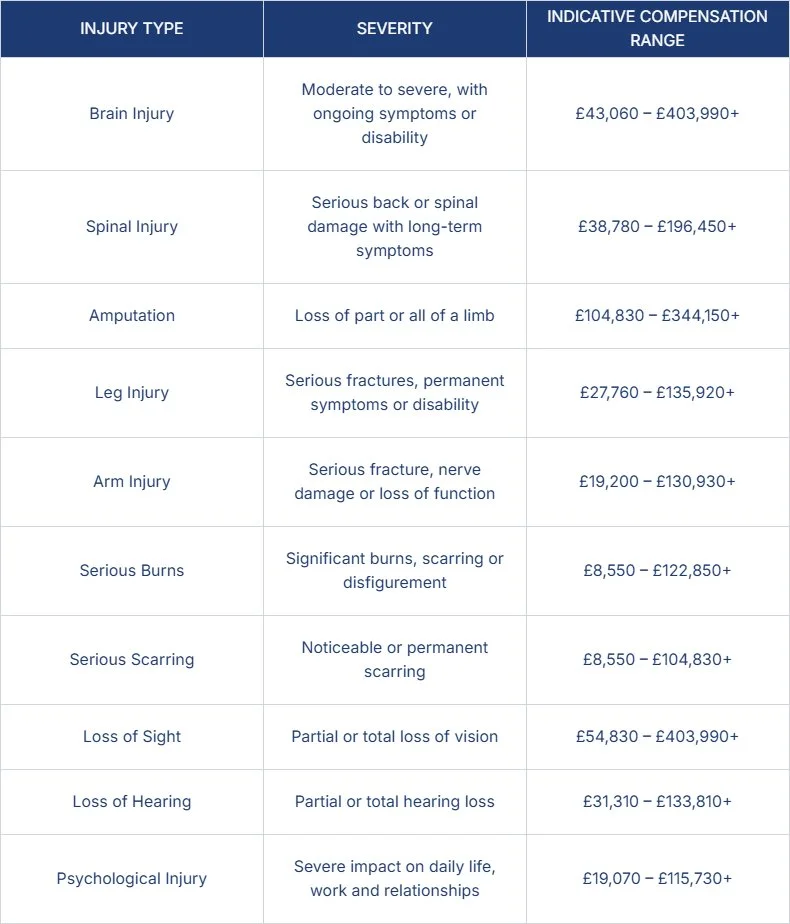
The amount of compensation you could receive depends on the type of injury, the severity, recovery time, long-term effects and how the injury has affected your daily life, work and independence.
The table gives general examples of possible compensation ranges for serious injuries.
These figures are only a guide. The value of a serious injury claim can vary significantly depending on medical evidence, long-term symptoms and future needs.
You may also be able to claim special damages, which can include loss of earnings, future loss of income, medical treatment, surgery costs, physiotherapy, rehabilitation, counselling, care and support, travel expenses, home adaptations, mobility aids, specialist equipment, prescription costs and damaged belongings.
WHAT IS NO WIN, NO FEE
A No Win, No Fee agreement means you can usually make a claim without paying legal fees upfront.
If your claim is unsuccessful, you normally do not pay your solicitor’s legal fees, subject to the terms of your agreement. If your claim is successful, a success fee may be deducted from your compensation.
This can make it easier to access legal support after a serious injury without worrying about paying legal costs at the start of the claim.
Before your claim begins, the terms will be explained clearly so you understand how the agreement works and what it means for you.
TIME LIMITS
In most personal injury claims, you usually have three years from the date of the accident or the date you became aware that your injury was linked to negligence.
There are exceptions. For example, different rules may apply if the injured person is under 18 or lacks mental capacity to manage their own claim.
Because serious injury claims can involve detailed evidence, medical reports and long-term care needs, it is best to seek advice as soon as possible.
WHY CHOOSE INJURIES DIRECT
At Injuries Direct, we provide clear and straightforward advice, explaining the serious injury claims process in plain English so you understand what is happening at every stage. We take the time to understand how your injury has affected your health, work, independence and day-to-day life, ensuring your individual circumstances are properly considered.
Serious injury claims often involve treatment, rehabilitation and future care needs, so we focus on making sure the full impact of your injury is reflected in your claim. From your first enquiry through to settlement, we will guide you through the process and keep you informed. Injuries Direct is a trading style of NJS Law, giving clients access to professional legal support and guidance.
HAYLEY YATES
Solicitor
OUR SERIOUS INJURY SOLICITORS
NICHOLA JOHNSON
Solicitor
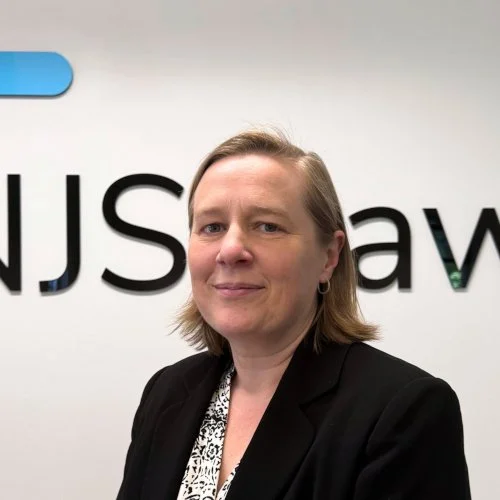
HELEN PENNEY
Solicitor

HANNAH MENZIES
Litigation Executive
FREQUENTLY ASKED QUESTIONS
-
A serious injury is one that has a major or long-term impact on your life, such as a brain injury, spinal injury, amputation, serious fracture, burns, scarring, or loss of sight or hearing.
-
Yes. Serious injury claims may include future losses such as future loss of earnings, future care, medical treatment, rehabilitation, equipment and home adaptations.
-
Yes. If family members have provided care or support because of your injury, this may be included as part of your claim.
-
Yes. Medical evidence is very important in serious injury claims. Expert medical reports may be needed to assess your injuries, recovery, future treatment and long-term needs.
-
The length of a serious injury claim depends on how complex the case is, how severe the injuries are, and whether the other side accepts responsibility.
-
Yes. If your injury affects your ability to work, you may be able to claim for lost earnings and future loss of income.
-
Yes. Rehabilitation needs such as physiotherapy, occupational therapy, counselling, mobility aids and specialist equipment may be included.
-
Most personal injury claims settle without going to court. However, if responsibility is disputed or a fair settlement cannot be reached, court proceedings may sometimes be needed.
-
In some cases, yes. A claim may be brought on behalf of a child, someone who lacks mental capacity, or a loved one who has suffered fatal injuries.
-
Many serious injury claims are handled on a No Win No Fee basis, meaning you usually do not pay legal fees upfront. The terms will be explained before your claim begins.